
Blackened Seasoning: The Ultimate Homemade Spice Blend Recipe
Every kitchen has its own magic. A special blend that makes simple meals into unforgettable dishes. For me, blackened seasoning is that magic. Growing up in Louisiana, I saw chefs make this spice mix that added deep, smoky flavors to any protein.
Blackened seasoning is more than just a spice mix. It’s a flavor revolution that changed American cooking. It started in New Orleans kitchens, where it turns simple ingredients into gourmet dishes with just a sprinkle.
If you love bold flavors or want to dive into Cajun cuisine, mastering blackened seasoning is key. This homemade blend brings professional taste to your kitchen. It lets you make meals that taste like they came from a restaurant.
In this guide, you’ll learn to make the perfect blackened seasoning. We’ll explore its history, key ingredients, and expert techniques. You’ll get a spice blend that will be your secret kitchen weapon.
Table of Contents
The Origins of Blackened Seasoning in Cajun Cuisine
Blackened seasoning came from Louisiana’s lively food scene. It changed how people blend spices at home and in restaurants. This method made Cajun cooking bold and inspired new dishes.
Chef Paul Prudhomme started it all. He introduced blackened seasoning at K-Paul’s Louisiana Kitchen in New Orleans.
Chef Paul Prudhomme’s Culinary Revolution
Prudhomme didn’t just make a seasoning. He created a cooking method that’s now famous. His method included:
- Coating proteins in rich, spicy herbs
- Searing at extremely high temperatures
- Creating a dark, crispy exterior
Evolution from K-Paul’s Kitchen
Prudhomme’s blackened redfish method became a hit across the country. It started a trend that made chefs and home cooks try new, bold flavors.
Impact on Modern Cooking
Now, blackened seasoning is used everywhere. Chefs and home cooks love it for turning simple foods into amazing dishes. It adds smoky, rich flavors to seafood and chicken, exciting everyone’s taste buds.
Essential Ingredients for Perfect Blackened Seasoning
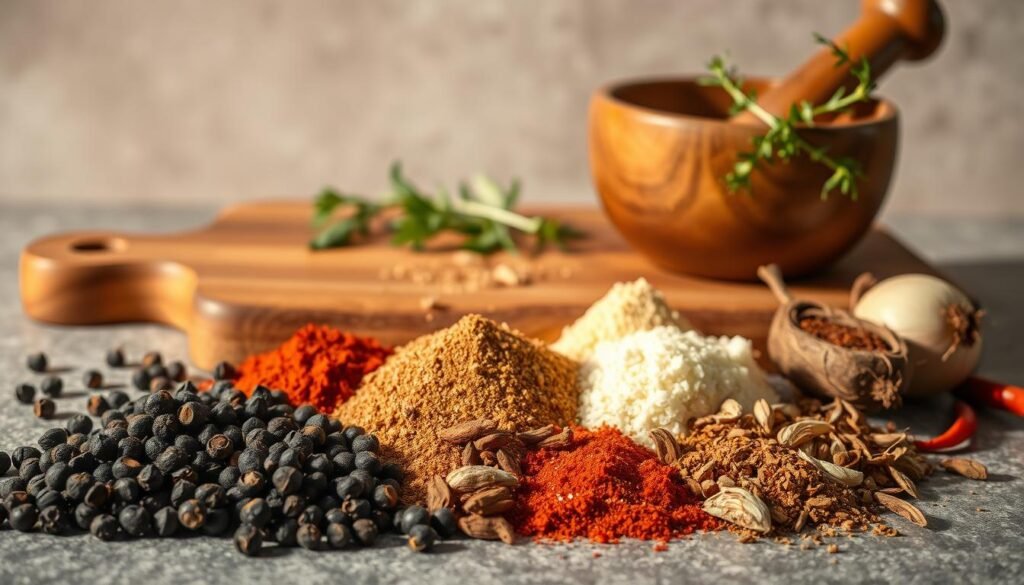
Creating the best blackened seasoning starts with choosing top-notch spices. These spices add depth and complexity to your dish. Your blackening spice recipe needs a mix of ground herbs and spices that make any meal special.
The key to an amazing blackened seasoning blend includes several ingredients:
- Paprika: Provides a rich, sweet-smoky base
- Garlic powder: Adds robust savory notes
- Onion powder: Contributes depth and aromatic complexity
- Dried thyme: Introduces earthy undertones
- Dried oregano: Brings Mediterranean-inspired flavor
- Cayenne pepper: Delivers signature heat
- Black pepper: Creates sharp, spicy kick
When making your best blackened seasoning, use fresh, high-quality spices. The quality of your ingredients greatly affects the flavor. Choose whole spices to grind yourself for the best taste.
Pro tip: Always store your blackening spice recipe in an airtight container away from direct sunlight to preserve its vibrant flavors.
Try different ingredient ratios to make your blend unique. Some like it spicier, while others prefer it balanced. The best thing about homemade blackened seasoning is that you can make it your own.
Understanding the Flavor Profile
Blackened seasoning is a special mix that turns simple dishes into amazing meals. It adds a deep flavor that makes fish and chicken taste unique.
The secret of blackened seasoning is its mix of flavors. These elements come together to give you a memorable taste.
Smoky and Spicy Elements
Smoky and spicy flavors are at the core of blackened seasoning. It includes:
- Paprika for deep smokiness
- Cayenne pepper for sharp heat
- Black pepper for underlying warmth
Herbal Components
Herbs add depth to the seasoning. Key herbs are:
- Dried thyme
- Oregano
- Basil
Savory Base Notes
The savory base of blackened seasoning comes from ingredients like:
- Garlic powder
- Onion powder
These add a rich, umami flavor that boosts the taste.
“Blackened seasoning is not just a spice blend, it’s a culinary art form that transforms simple ingredients into extraordinary meals.” – Chef’s Wisdom
Knowing these flavors helps you make the perfect blackened seasoning. It will wow even the pickiest eaters.
Step-by-Step Mixing Instructions
Making your own blackened seasoning is simpler than you think. The secret to a great blackening spice recipe is in the precise measurements and thorough mixing of quality spices.
First, collect all your ingredients. Make sure you’re in a clean, dry area with everything ready. The right way to mix can greatly affect your seasoning’s taste.
- Use a medium-sized mixing bowl.
- Measure each spice precisely.
- Whisk ingredients thoroughly
- Store in an airtight container
Your blackened seasoning recipe needs careful attention. Precision is crucial when mixing these strong spices.
| Ingredient | Measurement | Purpose |
|---|---|---|
| Paprika | 2 tablespoons | Base color and mild sweetness |
| Kosher Salt | 1 tablespoon | Primary seasoning |
| Cayenne Pepper | 1 teaspoon | Heat and intensity |
| Dried Thyme | 1 teaspoon | Herbal depth |
When mixing your blackening spice, use a whisk to blend everything well. This ensures the flavors are evenly spread, making a balanced seasoning that enhances any dish.
Pro tip: Gently tap the mixing bowl while whisking to help break up any potential clumps in your spices.
Keep your homemade blackened seasoning in an airtight container, away from sunlight and heat. This will keep its strong flavor for up to three months.
Blackened Seasoning vs. Cajun and Creole Blends
Exploring Southern spice blends can be confusing. Blackened seasoning, Cajun, and Creole blends may look similar but differ in key ways. Knowing these differences will make you a pro at using the best blackened seasoning.
Key Differences in Ingredients
Blackening seasoning’s main ingredients are:
- Paprika
- Cayenne pepper
- Garlic powder
- Onion powder
- Dried herbs
Unlike Cajun and Creole blends, blackened seasoning is made for a special crust on meats and seafood. It offers a strong flavor perfect for high-heat cooking.
Heat Level Comparisons
| Seasoning Blend | Heat Intensity | Flavor Profile |
|---|---|---|
| Blackening Seasoning | Medium-High | Smoky, Intense |
| Cajun Seasoning | High | Spicy, Robust |
| Creole Seasoning | Mild-Medium | Herbal, Complex |
Traditional Usage Methods
Blackening seasoning is great for searing proteins. Chefs suggest coating fish, chicken, or steak with it. Then, cook at high heat for a crispy, flavorful crust.
Cajun and Creole blends are used throughout cooking. But blackening seasoning is for that special dark, crisp crust that makes dishes stand out.
Perfect Ratios and Measurements
Making the perfect blackened seasoning recipe needs precision and careful measurement. Your homemade blackening spice recipe will stand out when you get the exact right amounts of each ingredient. Professional chefs agree that consistency is crucial for a balanced and flavorful spice blend.
For a classic blackened seasoning recipe, use these precise measurements:
- 2 tablespoons paprika
- 1 tablespoon kosher salt
- 1 tablespoon onion powder
- 2 teaspoons garlic powder
- 1 teaspoon black pepper
- 1 teaspoon cayenne pepper
- 1/2 teaspoon dried oregano
- 1/2 teaspoon dried thyme
When making your blackening spice recipe, use a clean, dry measuring spoon for accuracy. Mixing these ingredients gives a strong flavor that makes ordinary proteins taste amazing.
“Precision in spice blending is an art that separates good cooking from great cooking.” – Chef Paul Prudhomme
Pro tip: Always mix your spices in a non-reactive bowl and store them in an airtight container. This blackened seasoning recipe will stay potent for up to three months when kept in a cool, dark place.
Customizing Your Blend’s Heat Level
Making the best blackened seasoning is all about finding the right balance. You can adjust your homemade seasoning to fit your taste. It’s all about knowing how to tweak the heat.
Cayenne pepper is the main heat source in most blends. It can make your seasoning go from mild to very hot. Learning to control cayenne is key to getting it just right.
Controlling Cayenne Pepper Intensity
Here are some tips for adjusting cayenne pepper in your seasoning:
- Mild Blend: Use 1/2 to 1 teaspoon of cayenne pepper
- Medium Blend: Use 1-2 teaspoons of cayenne pepper
- Hot Blend: Use 2-3 teaspoons of cayenne pepper
Balancing Spice Levels
Creating the best seasoning is about more than just heat. It’s about finding harmony. Balance cayenne’s spiciness with spices like:
- Smoked paprika for depth
- Garlic powder for complexity
- Dried herbs to round out flavor
Try small batches to find your ideal seasoning. Remember, you can always add more heat, but it’s hard to take it away once it’s mixed.
Storage Tips and Shelf Life
Storing your homemade blackened seasoning right is key. It keeps the flavors bright and strong. Your blackening spice recipe needs the best care to stay tasty and potent.
Choose the right container for your seasoning. A glass jar or sealed spice container is best. Store it in a cool, dark spot. Avoid sunlight and heat, which can harm the spices’ oils and taste.
- Store at room temperature
- Use airtight containers
- Avoid moisture and direct sunlight
- Label with the date of preparation
Your blackened seasoning can last 6 to 12 months. Making smaller batches often keeps it fresh. This way, your seasoning stays flavorful and potent.
Look out for signs that your seasoning is losing its flavor:
- Dull or faded color
- Reduced aroma
- Less intense flavor
Pro tip: Give your blackened seasoning a quick smell test every few months. If the aroma seems weak, it might be time to prepare a fresh batch.
Fresh spices are the secret to an extraordinary culinary experience!
Best Cooking Applications and Techniques
Learning to use blackened seasoning recipe can turn simple meals into amazing dishes. Your kitchen becomes a place to make dishes that taste like they’re from a restaurant. It’s all about using simple techniques to bring out the best in this spice blend.
Searing Methods for Perfect Blackening
For a real blackened seasoning recipe for fish, you need high-heat searing. Cast-iron skillets are the best for getting that dark, crispy crust. Here are the key steps:
- Preheat your skillet until it’s smoking hot
- Use minimal oil to prevent burning
- Cook protein for 2-3 minutes per side
- Avoid moving the food while searing
Temperature Control Secrets
When using a blackened seasoning recipe, controlling the temperature is key. Aim for a skillet temperature between 400-450°F. This will give you a perfectly caramelized exterior without burning the spices.
Coating Techniques for Maximum Flavor
To get the most flavor from your blackened seasoning recipe for fish, follow these coating tips:
- Pat the protein dry with paper towels
- Generously coat with seasoning
- Press seasoning firmly into the surface
- Shake off excess spice blend
These techniques work for seafood, chicken, or vegetables. They help you make dishes that taste like they’re from a restaurant, right in your own kitchen.
Conclusion
Making the best blackened seasoning at home is more than a skill. It’s an adventure in exploring flavors. By learning about this spice blend, you open up a world of exciting cooking possibilities.
With blackened seasoning, you can turn simple meals into gourmet dishes. Just a sprinkle of the right spices can make a big difference. It’s all about mastering the balance of flavors.
Blackened seasoning is incredibly versatile. It can elevate seafood, chicken, or vegetables to new heights. Every time you try a new mix, you’ll find new flavors in your dishes.
Stay curious and keep adjusting your recipe to fit your taste. This is how you create your own unique flavor.
Now you know how to bring authentic Cajun and Creole flavors into your kitchen. Start with a basic recipe and then make it your own. With practice, you’ll get better at mixing the perfect blend of heat, herbs, and savory flavors.
Great cooking is about passion, creativity, and always learning. Your blackened seasoning will change with each dish, showing your growth and taste. Enjoy the journey and the delicious food that comes from it.
FAQ
What is blackened seasoning?
Who invented blackened seasoning?
How do I make my own blackened seasoning at home?
What foods work best with blackened seasoning?
How spicy is blackened seasoning?
How long can I store homemade blackened seasoning?
What’s the best cooking method for blackened dishes?
How is blackened seasoning different from regular Cajun seasoning?
Have you tried our recipes?
There are no reviews yet. Be the first one to write one.